











- We're known for
- Media and AdTech
- Adtech
Take control of your adtech before it controls you.
Choosing the right tools isn’t easy. Depending on a platform for your data isn’t advisable. And making technological decisions without a framework or objective criteria is risky. Adviso helps you take control of your adtech architecture while ensuring you remain the owner of your data and technological infrastructure.
56% of executives state they are overwhelmed by data that is fragmented and from disparate sources.
The right tools to do the job right.
Adtech
Make informed technology choices while remaining the owner of your data. Using analysis grids, we objectively compare solutions based on their features, integration, evolvability, costs, data governance, and compatibility with your context and business needs.
General architecture
Avoid useless expenses. We handle your ad servers, media platforms, measurement solutions, and activation tools. Our goal is to design cohesive environments that are well-integrated and align with your performance goals.
Data ownership
Remain the owner of your data. We give preference to models in which the data are hosted in the client’s environments, instead of being captured by an agency or third-party platform. We protect the continuity of your learnings, facilitate future transitions, and strengthen the autonomy of teams.
Support for teams
Fully master your adtech tools. We support your teams so that they understand and take control of your chosen tools. The goal is to transform your technology ecosystems into a true strategic asset that is sustainable and evolvable.
We master the tools that matter
Why us?
We’re one of the rare players in Quebec that help you choose complex tech while being 100% agnostic.
We show you a platform when it’s actually relevant to your context and company maturity level. Our strength: structured evaluation grids that objectively compare solutions so we can recommend the right technological architecture. At adviso, adtech is a lever for performance, governance, and autonomy.
Our clients’ results speak for themselves.
In a complex market where every dollar counts, we helped Sail fundamentally rethink its media performance.
By combining artificial intelligence, first-party data, and offline signals, we optimized every lever to maximize the real impact of its investments.
The result: 549% ROAS, $16M in online revenue, and an increase in average order value, proof that a well-structured approach can transform marketing performance into concrete business results.
Ubisoft aimed to take full control of its media investments and build an in house capability aligned with its operational and business objectives.
We supported their teams end to end, from defining a clear roadmap to selecting and implementing the right technologies across their media, data and analytics ecosystem. Every step was designed to reduce dependencies, streamline operations and increase speed of execution.
By restructuring data, refining audience segmentation and deploying the right tools, Ubisoft significantly improved its ability to plan, activate and optimize campaigns internally.
Result Ubisoft increased its audience segments tenfold, achieved a 127% return on investment within the first year and completed the full implementation in under six months. Proof that internalizing media can quickly drive both efficiency and measurable business impact.
In a complex digital environment involving multiple teams and systems, Air Canada needed to rely on its data to make informed business decisions.
We redesigned the entire analytics architecture to ensure consistent, reliable and actionable data collection. By structuring tagging, aligning data sources and coordinating teams, we reduced inconsistencies that were limiting decision making.
At the same time, we streamlined partner integrations and accelerated marketing activation processes.
Result data discrepancies between analytics and booking systems were reduced by 80%, partner activation time decreased by 50% and more than 200 tags were deployed to enhance data collection. Proof that reliable data is a direct driver of performance and efficiency.
In a context where the main objective was to generate sales calls, HydroSolution needed to better connect digital initiatives to real business outcomes.
We deployed an integrated strategy combining SEO, SEM, display and social media, while implementing call tracking to link each digital interaction to a concrete action. By continuously optimizing campaigns and improving landing pages, we maximized conversion from qualified audiences.
This approach turned visibility into measurable results.
Result sales calls increased by 30%, significantly exceeding the initial objective, over 1,000 forms were generated and more than 150,000 clicks were driven from qualified audiences. Proof that an integrated strategy can directly impact sales.
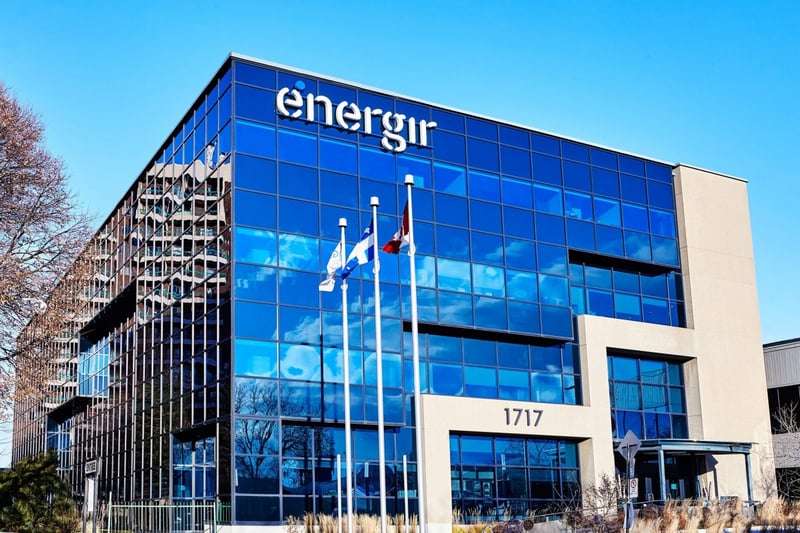
As Energir needed to reach a niche audience of engineers, traditional advertising formats were no longer sufficient.
We tested and deployed a new conversational ad format on LinkedIn, allowing direct engagement through personalized messages delivered in users’ inboxes. By combining precise targeting with an interactive experience, we captured the attention of a highly sought after audience.
This approach transformed a standard channel into a high performance driver.
Result cost per lead decreased by 87%, form submission rate reached 71% and 25% of webinar registrations were driven by this format. Proof that media innovation can drive significant performance gains.
As Nespresso aimed to maximize the value of its audiences, the challenge was to move from generic targeting to behavior based segmentation.
We implemented and activated a data management platform by leveraging CRM data to build advanced segments using clustering models. By identifying the most valuable customer profiles, we deployed highly precise audiences across channels.
This approach turned data into a direct performance driver.
Result revenue per thousand impressions increased by 40%, data matching processes improved significantly and over $75,000 in media efficiency gains were generated within three months. Proof that advanced data usage can quickly drive measurable performance gains.
Dans un contexte où Reitmans devait augmenter ses ventes en ligne dans un environnement très concurrentiel, l’enjeu était de rejoindre efficacement de nouvelles audiences tout en maximisant le rendement des investissements.
On a déployé une stratégie d’acquisition basée sur l’automatisation et l’exploitation des données produit pour diffuser des messages personnalisés à grande échelle. En combinant signaux comportementaux et inventaires en temps réel, on a optimisé la diffusion des campagnes pour atteindre les consommateurs les plus susceptibles de convertir.
Cette approche a permis d’accélérer la croissance tout en améliorant l’efficacité média.
Résultat le retour sur les dépenses publicitaires a été multiplié par 3, le coût par session a diminué de 35 % et le volume de visites a augmenté de 60 %. La preuve que l’automatisation média peut transformer la performance d’acquisition en e-commerce.
Finding answers is in our DNA.
What is adtech and what purpose does it serve in marketing?
It’s all of the technologies for distributing, measuring, and optimizing ads. It lets you better orchestrate media investments, improve the precision of campaigns, connect advertising actions to real results, and ensure data governance.
How do you choose the right adtech tools for your organization?
By comparing several solutions with the help of objective criteria—features, integration, costs, evolvability, and data governance. The choice should be made based on business needs, maturity level, and the existing ecosystem.
When should an organization take a second look at its adtech stack?
When performance stagnates, the data are hard to exploit, the tools are no longer well understood, or the technology ecosystem curbs the autonomy of teams.
Why is it important that adtech data belong to the client?
To ensure the organization retains control of its learnings, history, and future decisions. This reduces risks related to changing partners, facilitates technological evolution, and ensures better governance of data in the long term.
What is the role of an ad server in a media ecosystem?
An ad server acts as a central hub for the dissemination, management, and measurement of advertising campaigns. It lets you control the distribution of messages, consolidate performance data, and ensure consistency between the different channels and platforms used.
You know where you want to go.
We know how to get you there.
Tell us what you need and we’ll help you find the best solution.
Find and leverage what really matters.
Get our insights and recommendations to stay ahead in the digital landscape.